In brief

Compare long campaigns with short runs using the actual fertiliser, its supplied and stored conditions, and the approved bag and liner. A long run needs stable feed, replenishment and completed-bag removal. Frequent changes also require identified formulations, agreed residue removal and checks of bag geometry, support and the closure.

Use the same supplier questions for each route and line and finished-bag handover review. Record accepted filled-and-closed bags, quantity checks, visible losses and interruptions; do not infer the whole line result from the dosing head alone.

On the production floor

Match the solution to your product, part and operating needs — Fertiliser Bagging Machines

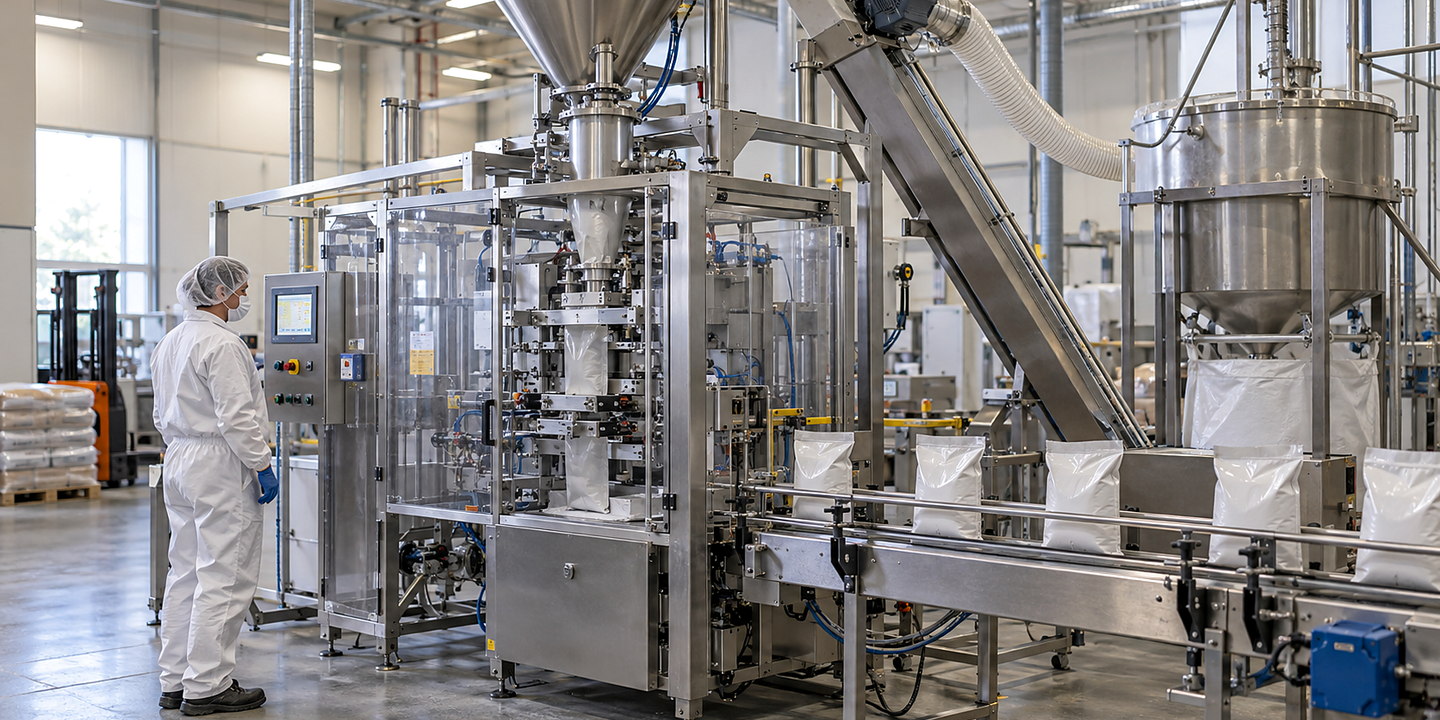
Plan fertiliser bagging machines around your product, pack range, target output, cleaning needs and finished-pack checks. Discuss a practical line concept with Lancing using representative samples. Use the application examples to compare routine production using granular fertiliser weighing and bagging with short runs and format changes involving granular fertiliser weighing and bagging.

Discuss your application
Application 1

Routine Production Using Granular Fertiliser Weighing and Bagging

Use representative material from normal storage and handling conditions to assess stable feed, weighing, replenishment and downstream removal. Trial the actual bag and liner through the closer, recording accepted finished bags, quantity and closure checks, losses and interruptions.

Explore this application
Application 2

Short Runs and Format Changes Involving Granular Fertiliser Weighing and Bagging

Identify formulations and the residues that the product owner requires removed under the approved method. Compare the lowest and highest intended fills in the actual bags and liners, including top clearance, support, transfer and suitability for the intended closer.

Explore this application
Choose the right route

Four questions that can change the recommended approach

What arrives?

Identify the fertiliser composition and safety information, granule-size range, fines, caking and moisture observations. Supply actual bag and liner samples with dimensions, fill weights and the approved closure.

What must happen?

Define weighing, bag presentation, filling, transfer and closing as one process. Agree quantity, closure, coding and identification checks at the accepted-bag handover.

What surrounds it?

Show incoming product, replenishment, operator tasks, full-weight support, spill routes and downstream pallet handling. Include services, extraction needs and the product owner’s approved cleaning or formulation-change method.

What result do you need?

Record accepted filled-and-closed bags, weight checks, visible losses, interruptions and identified held or rejected bags. Include difficult product conditions, bag-size changes and replenishment in the agreed trial.

ApproachOften suitable whenWatch for
Fertiliser Bagging MachinesYou need a dedicated solution for a clearly defined duty, fertiliser and bag range and line interface.Chemical compatibility, vapour, dust and hazardous-area duties require substance-specific assessment.
Semi-Automatic Equipment for Lower-Volume or High-Changeover WorkYour volumes, product mix or operator judgement make a simpler route more practical.Check ergonomics, consistency and safe access before choosing the lower-complexity option.
Fully Automatic Line Integration where Repeatable Container Flow and Rate Justify ItYour surrounding process is stable enough for a broader automated solution to add value.Allow for line connections, fault recovery and maintenance as well as the headline equipment.

Match fertiliser bagging to the way each formulation behaves

Free-flowing granules and variable fines

Describe the normal granule-size distribution and the fines observed after transport or handling. A product that pours freely from a fresh sample can behave differently after storage. Compare the feed and weighing arrangement with material taken from representative conditions, recording any bridging, dribble or retained product rather than treating every fertiliser as the same bulk solid.

One long campaign or frequent formulation changes

A long run places emphasis on stable feed, bag replenishment and downstream removal. Short campaigns add emptying, material identification and cleaning between formulations. Identify which residues may be carried over and which must be removed under the product owner’s approved method; do not assume that a quick colour change means the previous formulation is cleared.

Change bag size without overlooking the closure

Changing a nominal weight also changes filled bag geometry, top clearance and support during transfer. Compare the lowest and highest intended fills in the actual bag and liner. Observe whether the mouth remains suitable for the approved closer and whether the filled bag reaches the next station without spilling or folding into the closure area.

Measure the whole bagging result

For each application, record accepted filled-and-closed bags, quantity checks, visible losses, operator tasks and interruptions. Agree how held or rejected bags remain identified. Bring the actual substance information and safety requirements into the equipment review before trials. Use the selection guide and integration guidance to turn these differences into a specific layout and test plan.