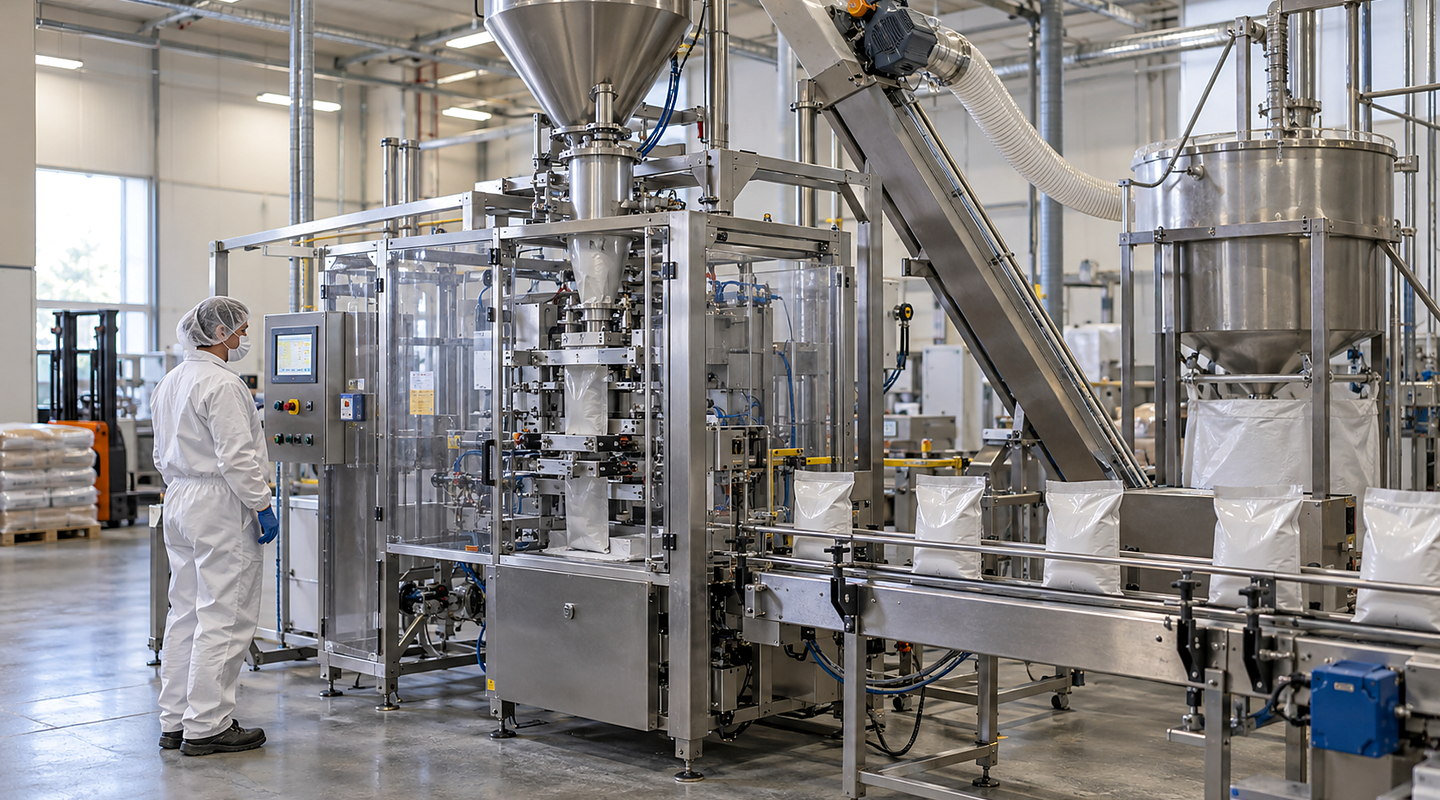
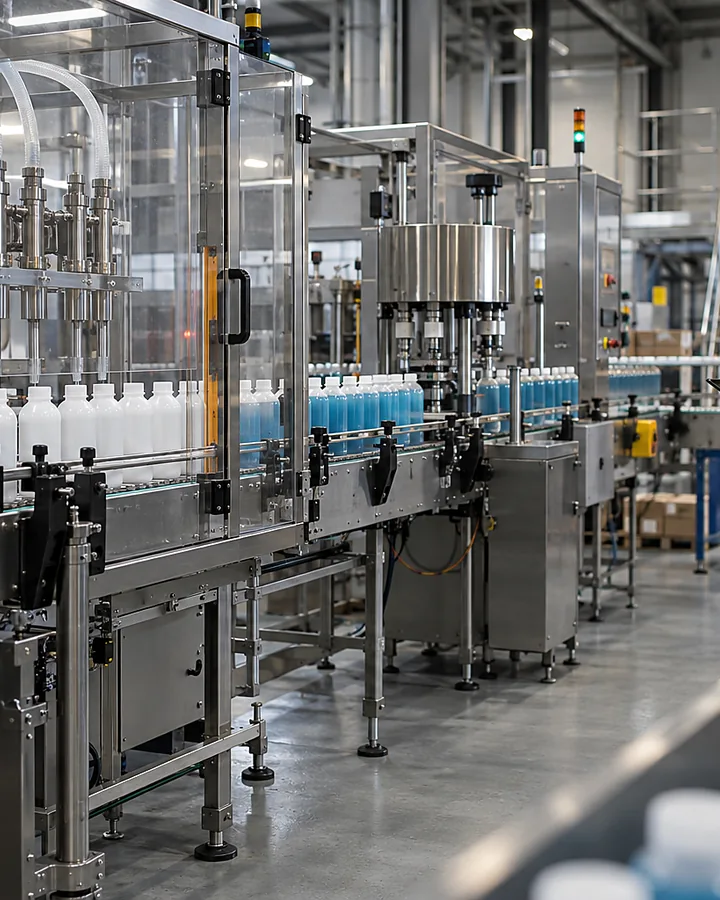
How should granular fertiliser weighing & bagging product behaviour be investigated before specifying fertiliser bagging machines?
In brief
Investigate the actual formulation in its supplied and stored conditions. Record granule-size variation, fines, moisture, caking and abrasion observations, then compare feed and weighing with representative replenishment conditions and the intended bag and liner. Record accepted finished-bag results as well as material-flow observations.
For routine production using granular fertiliser weighing and bagging, describe the realistic range and how changes in granular fertiliser weighing & bagging product behaviour affect the result you need.
On the production floor
Turn your production information into clearer decisions — Fertiliser Bagging Machines
Plan fertiliser bagging machines around your product, pack range, target output, cleaning needs and finished-pack checks. Discuss a practical line concept with Lancing using representative samples. Use this guide to resolve granular fertiliser weighing & bagging product behaviour before it limits the final system.
Granular Fertiliser Weighing & Bagging Product Behaviour: condition, range and effect on your process
Current condition
Describe how you observe or measure granular fertiliser weighing & bagging product behaviour in your operation, including sample condition and any measuring limits. For a project focused on granular fertiliser weighing and bagging, also record the production state in which each observation was made.
Realistic range
For Fertiliser Bagging Machines, include normal production conditions, credible extremes, fertiliser formulations and bag variants and changes over time.
Effect on the system
Show which settings, safeguards, maintenance tasks, decisions or required outcomes are affected by changes in granular fertiliser weighing & bagging product behaviour.
Before you contact us
Five questions about granular fertiliser weighing & bagging product behaviour for your application
Who can confirm this information?Identify the person responsible for granular fertiliser weighing & bagging product behaviour in production, quality, engineering or operations.
How representative is the sample?Include age, supplier, batch, environment and upstream process state where they affect fertiliser bagging machines.
What is the difficult condition?Include material from credible storage and handling extremes, with observed fines, moisture or caking and the relevant replenishment state. Record bridging, dribble, overshoot, retained product and interruptions where they occur.
How will you judge the result?Agree the method, repetitions, acceptable range, result record and the response if the observed result falls outside the agreed range.
What else must be coordinated?Your final fertiliser bagging machines scope must also account for cleaning, access and changeover method, finished-pack checks and reject handling, current regulations and the conditions at your site.
Connected details
Review granular fertiliser weighing & bagging product behaviour as part of the complete system
Identify each formulation and its supplier or batch, storage and handling state. Keep observations of granules, fines, moisture, caking and abrasion with the sample so a favourable fresh sample is not treated as the whole operating range.
Question 2
Bag Construction, Liner and Closure
Use the intended bags and liners when investigating product behaviour. Check filling, full-weight support, transfer, bag-top contamination and the approved closure together; free flow alone does not establish a finished-bag result.
Question 3
Target Bag Weight and Quantity Checks
Compare target weights with what is actually weighed under representative feed and replenishment conditions. Record overshoot, retained material and the agreed quantity-check method without assuming a nominal fill proves the range.
Question 4
Required Output and Production Pattern
Measure accepted filled-and-closed bags while recording feed interruptions, replenishment, visible losses and operator tasks. Separate material-flow observations from the output of the whole bagging operation.
Question 5
Cleaning, Access and Changeover Method
Record residues and access needs during emptying and formulation changes. Use the product owner's approved removal and cleaning method, and repeat relevant observations when material conditions or duty change.
Question 6
Finished-Pack Checks and Reject Handling
Keep quantity, closure and identification results with the material and bag conditions used. Identify held or rejected bags and record visible losses and interruptions so the outcome can be related to the tested product range.