Routine Production Using Granular Fertiliser Weighing and Bagging
Plan routine production using granular fertiliser weighing and bagging around representative products, packs and packaging materials, line connections, operating limits, acceptance checks and next steps.
In brief
For routine production using granular fertiliser weighing and bagging, start with representative products, packs and packaging materials and your full operating sequence, then check the credible product, pack, cleaning and line-rate extremes before committing to a final layout.
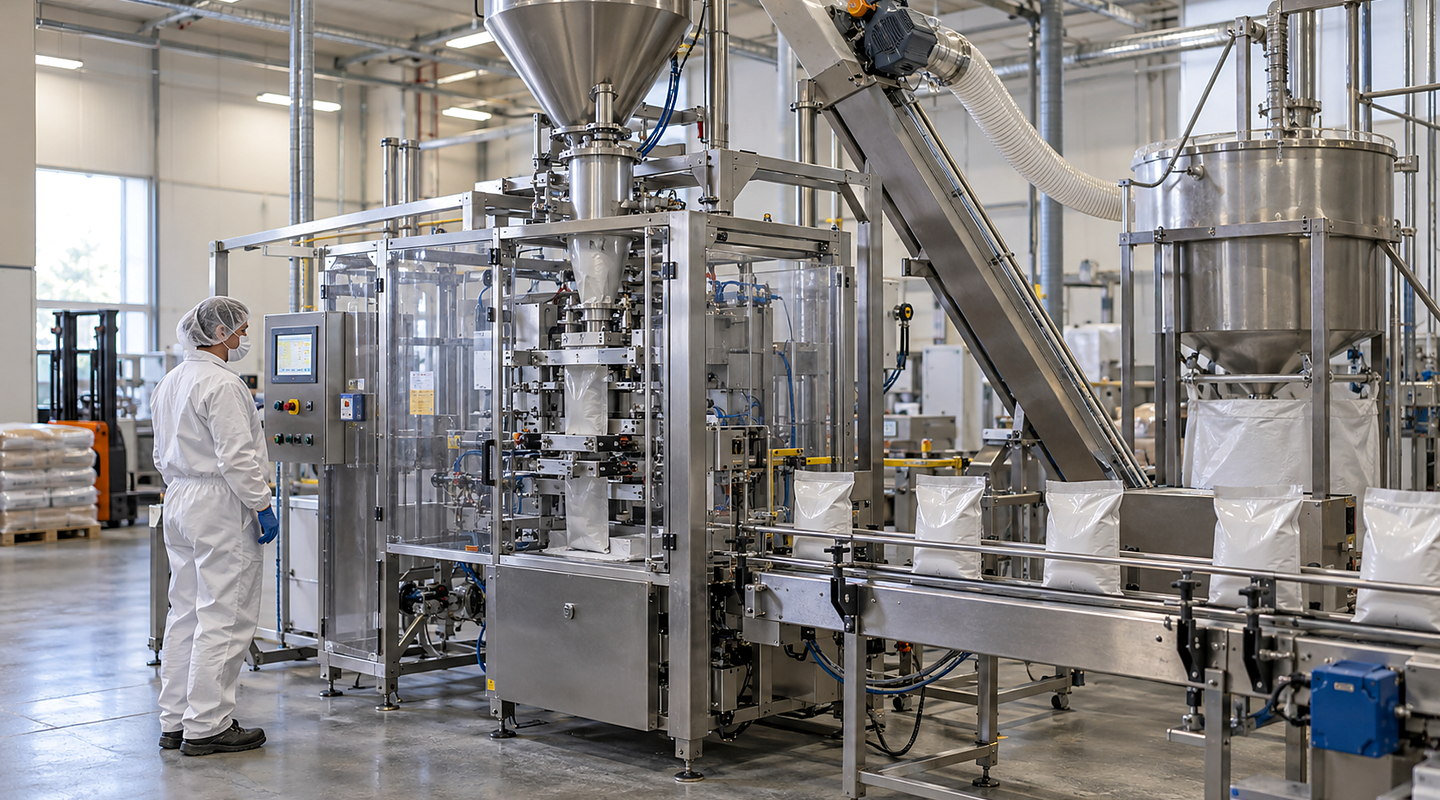
Plan fertiliser bagging machines around your product, pack range, target output, cleaning needs and finished-pack checks. Discuss a practical line concept with Lancing using representative samples.
On the production floor
Plan for the conditions your team handles every day — Fertiliser Bagging Machines
Plan fertiliser bagging machines around your product, pack range, target output, cleaning needs and finished-pack checks. Discuss a practical line concept with Lancing using representative samples. For routine production using granular fertiliser weighing and bagging, the deciding details include granular fertiliser weighing & bagging product behaviour, target bag weight and quantity checks and finished-pack checks and reject handling.
Describe the fertiliser formulation and its normal supplied and stored conditions. Include granule-size variation, fines, moisture and caking observations so feed and weighing trials represent a normal campaign, not only a fresh hand-selected sample.
Question 2
Bag Construction, Liner and Closure
Run the actual bag and liner through presentation, filling, transfer and the approved closer. Review bag dimensions, full-weight support, top clearance and product at the bag mouth under routine replenishment conditions.
Question 3
Target Bag Weight and Quantity Checks
State the intended bag-weight range and quantity checks. Record what is weighed, how material reaches that stage, and any overshoot or retained product using representative production material.
Question 4
Required Output and Production Pattern
Define the required accepted filled-and-closed output over the production pattern. Include material and bag replenishment, operator tasks, downstream removal and interruptions in the observed result.
Question 5
Cleaning, Access and Changeover Method
Include normal emptying, access, cleaning and planned changes in the campaign. Identify residue-removal requirements and the product owner's approved method before transferring to another formulation.
Question 6
Finished-Pack Checks and Reject Handling
Agree the quantity, closure, coding and identification checks at final handover. Record visible losses, interruptions and held or rejected bags, keeping accepted output separate from all bags started.
Your operating cycle
Plan for more than automatic running
Include replenishment, normal production, planned change, short stops, fault recovery, cleaning and maintenance for routine production using granular fertiliser weighing and bagging. A fast automatic step can still leave your team with a slow or awkward overall process.
Normal production and variant changes
Replenishment and material presentation
Operator access and safe interventions
Cleaning, maintenance and recovery
Prove the result
Test routine production using granular fertiliser weighing and bagging against representative products, packs and difficult production conditions
Normal production
Run the agreed fertiliser and bag mix for routine production using granular fertiliser weighing and bagging at your intended operating pattern.
Difficult conditions
Include credible extremes for granular fertiliser weighing & bagging product behaviour and bag construction, liner and closure.
Fault and recovery
Show how the proposed solution detects a problem affecting routine production using granular fertiliser weighing and bagging, responds safely, informs your team and restarts under control.
Important limits
Be clear about what the trial has shown
Chemical compatibility, vapour, dust and hazardous-area duties require substance-specific assessment.
The selected method must be trialled with representative product and packaging.
Supplier tolerances and product-condition changes can alter handling or fill behaviour.